To learn how to change the garage door opener code, first check the opener’s manual for your exact model. Most code changes involve setting a new keypad PIN, removing old remote access, or both. Follow the steps for your unit, keep the door area clear, and test every control safely.
A keypad or remote makes it easy to enter a garage without a key. But an old code may still let someone in after their access should end. In Marion, homeowners and property owners can use these general tips, while relying on their own opener manual for the right buttons and timing.
Table of Contents
- When should you change your garage door opener code?
- What should you check before changing the code?
- How do you change the code on a garage door keypad?
- How do you change the code on a garage door opener?
- What should you do if the new code does not work?
- How can you keep children and pets safe around the keypad?
- How can you maintain secure, reliable garage door access?
When should you change your garage door opener code?
Change a keypad PIN or remote access when someone who knew it should no longer enter. This may follow a move, a change in household members, or a lost remote. It can also make sense if many people know the PIN or if it is easy to guess.
Situations that call for a code change
A garage door keypad PIN is the number entered to open the door. Treat it like a house key: share it only with people who need access. If a remote goes missing, changing the keypad PIN may not block that remote. The lost device may need to be removed from the opener’s memory too.
A code change may also be needed after a worker or guest used a temporary code. Businesses should check which staff still need access and follow their own rules. Marion Garage Door Repair can help property owners when keypad or opener controls do not work as expected. A working access plan helps keep the best garage door secure for the people who need to use it.
How rolling codes differ from fixed codes
A rolling code is a remote signal that changes each time the remote is used. This makes it harder for someone to reuse a copied signal. A fixed code stays the same until it is changed. The opener’s age and model affect which kind it uses, so check the manual.
A keypad PIN and paired remotes may be stored in separate settings. Changing one may not change the other. Before starting, decide whether to update the PIN, remove old remotes, or do both. A code change helps only when you update the access method that needs attention.
What should you check before changing the code?
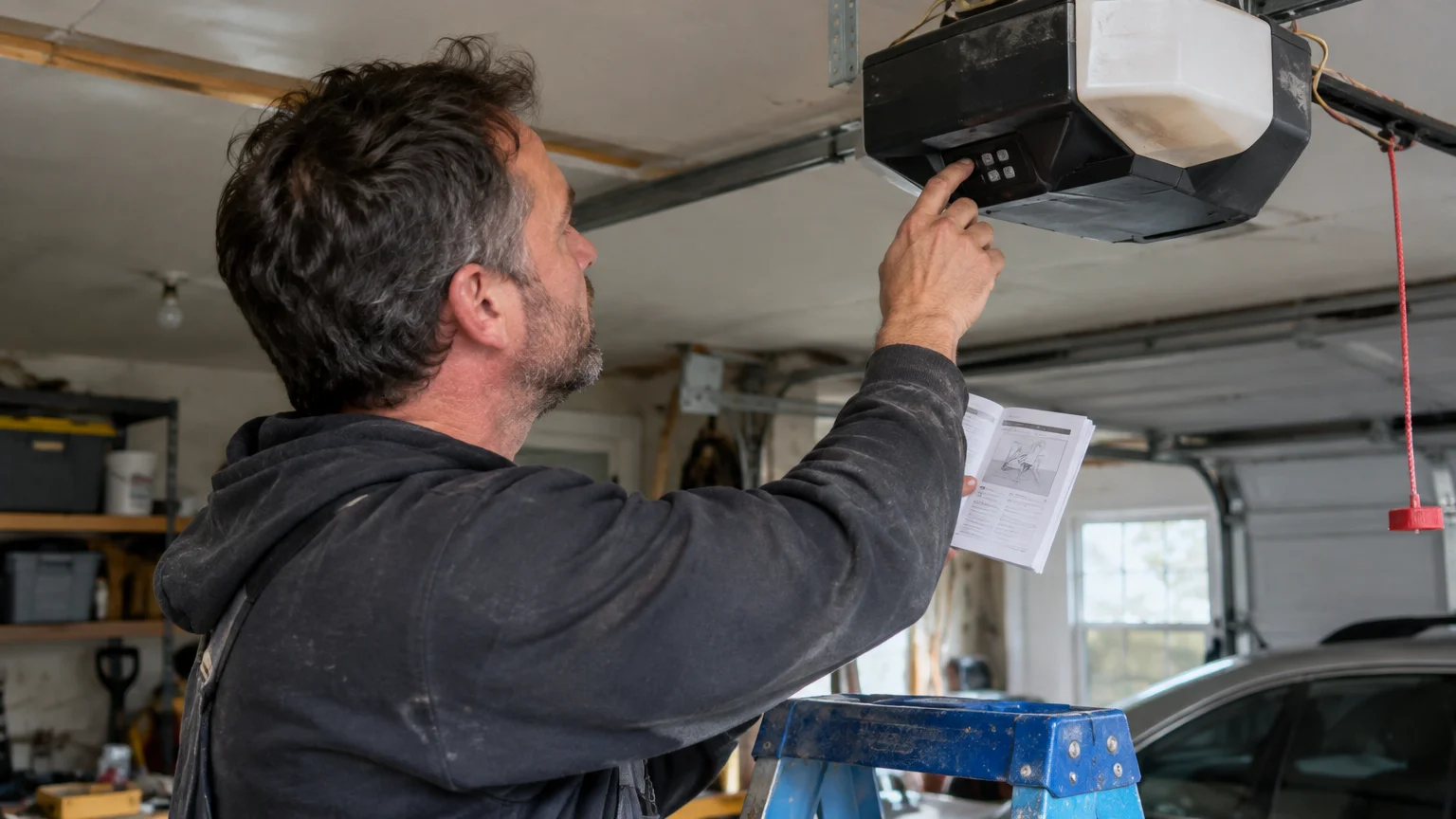
First, find the opener’s brand and model, then read its manual. Brands use different buttons and timing, so one general method may not work for every unit. Find the learn button only as the manual explains, and clear the area before testing the door.
Identify the opener and learn button
The opener is the motor unit fixed above the garage door. Its label often shows the brand and model. The learn button pairs remotes or keypads with the opener. Its color and place can vary. Do not guess which button to press, since the wrong steps may erase other remotes or change a setting.
If the label is hard to read, look for the manual using the model name. It should explain how to enter programming mode and whether you can remove one remote or all paired devices. Keep the manual nearby while you work. Do not touch wires or take off covers unless the manual says it is safe.
Gather the manual and decide which devices to keep
Make a list of the remotes and keypads that should still work. Include household remotes, the wireless keypad, and any car controls linked to the opener. A wall control or smart-home device may also be part of the setup. The manual can tell you whether each one uses the same memory or needs its own setup.
Keep the door closed and move people and pets away from its path. Keep the wall control close, but do not stand beneath the door while testing. If a remote is lost, plan to remove its access instead of assuming a new keypad PIN will block it. If the opener is stuck or the door will not move, Garage Door Opener Repair may be needed before you try to program it.
How do you change the code on a garage door keypad?
To change a keypad code, follow the exact pairing steps in the opener manual. Many systems use the learn button to connect the keypad, then ask you to enter a new PIN. The button order and time allowed can vary, so use the manual for your model.
Step 1: Enter programming mode with the learn button
Check that the door is shut and the area around it is clear. Find the learn button by using the manual, then follow the steps listed for your opener. Some openers stay in programming mode for only a short time. If that time passes, start again as the manual says instead of pressing random buttons.
Keep your hands away from moving parts, and never stand under the door. The opener may move during pairing or testing. If the door starts to move without warning, stop using the keypad and follow the manual’s safety advice. You do not need a professional just to follow clear, safe steps. Stop if the controls or door act in an odd way.
Step 2: Set and test a new keypad PIN
Enter your new PIN as the manual directs, then finish pairing the keypad. Choose a number your household can recall but a visitor is unlikely to guess. Avoid a date, street number, or easy number pattern. Do not write the PIN where it can be seen from outside.
Test the keypad from a safe place where you can see the door. Make sure the doorway is clear before pressing the button, then check that the door opens and closes as expected. If the keypad fails, do not keep trying random codes. Check the manual, the battery, and the timing first. Make sure the safety sensors are still clear and in place.
How do you change the code on a garage door opener?
For remote access, check whether the opener can erase all paired remotes or remove one device at a time. Some models clear stored remotes during a set process, while others use different controls. Follow the manual for your model so you do not erase useful remotes by mistake.
Step 1: Clear old remote codes when the model allows it
If a remote is lost or you need to reset access, the manual may explain how to erase stored remote codes. This could disconnect every remote, not just the missing one. Check what will be erased before you begin, and have the working remotes ready to pair again.
Do not open the motor cover or work on wires to change a code. Stop if the steps are not clear, the learn button is damaged, or the opener moves without a command. A technician can check the controls and help with safe programming. Electrical faults and door movement problems will not be fixed by trying codes again and again.
Step 2: Reprogram the remotes and controls still in use
Pair each approved remote by following the manual, one at a time. Test each from a place where you can see the door. Keep everyone out from under the door while it moves. If a car’s built-in control is linked to the opener, check the car manual too.
A wall control may not use the same code as a wireless remote, so it may stay connected when remote codes are erased. Smart-home controls may need their own setup as well. After all planned devices work, put the manual somewhere easy to find and keep the PIN private. Marion Garage Door Repair can explain Garage Door Opener Repair options if the opener will not pair or respond.
What should you do if the new code does not work?
If the new code fails, check simple causes first. The keypad battery may be weak, the button order may be wrong, or the time allowed for pairing may have passed. Then check that the keypad works with the opener. Do not force the door or repeat steps the manual does not support.
Check batteries, button timing, and programming steps
A weak keypad battery may light the keypad but fail to send a clear signal. Replace it only as the keypad manual allows, then follow the pairing steps again. Check that you entered the PIN correctly and pressed each button at the right time.
Some keypads need to be paired again after the opener’s stored codes are erased. If the opener light does not respond as the manual describes, stop and check the model instructions. Do not guess at button combinations. Too many attempts may erase other pairings or leave you unsure which devices still work.
Resolve signal or compatibility problems safely
If the keypad works only from nearby, check for a weak battery, damage, or something blocking the opener antenna. The manual may list which keypad models work with your opener. Older units may not support a newer keypad or remote, even if they look alike.
Do not pull on the door or force it open to test a faulty system. A heavy, crooked, stuck, or off-track door may have a mechanical problem. Garage Door Off Track Repair is not the same as keypad programming and should be done by a trained technician. If the opener hums, reverses, or cannot move the door, professional help can find the cause and support garage door safety.
How can you keep children and pets safe around the keypad?
Keep the PIN private, put the keypad where young children cannot reach it, and teach children not to play with the controls. Keep people and pets away from a moving door. A keypad controls access, but it does not replace safety features or adult care.
Store the PIN securely and prevent unintended operation
Share the PIN only with people who need regular access. If a child or visitor learns it, change it and tell approved users the new number in private. Do not write it on the keypad cover, a nearby wall, or anything visible through a window. Rental homes and businesses should follow their access rules and change codes when approved users change.
Explain that the keypad is not a toy and that no one should open the door while another person is in its path. Keep remotes out of reach of young children. If children can press the keypad, think about a safer place for it that adults can still reach.
Keep children clear of moving parts and safety sensors
Garage door safety sensors sit near the floor and help the opener sense an object in the door’s path. Keep the sensor lenses clean and do not cover, move, or bypass them. Children and pets should stay clear while the door opens or closes, even if the sensors seem to work.
Adults can check that the sensors are not blocked and that the door responds as the manual says. Never use a child, pet, or body part to test the sensors. If the door does not stop or reverse as expected, stop using it and arrange a repair. A keypad or remote is not a safety device.
How can you maintain secure, reliable garage door access?
Review who has access, keep the opener instructions, and check safety features as the manual directs. Homeowners can do simple checks and cleaning themselves. Leave springs, lift cables, and other parts under tension to trained technicians. A safe door should respond to its controls without odd movement or noise.
Review access and test the door
Check which household members, workers, or tenants still need a remote or PIN. Remove access that is no longer needed, and store spare remotes safely. During routine checks, look for keypad damage, loose parts, blocked sensors, and uneven door movement. If the manual allows, wipe sensor lenses with a soft cloth.
Garage door maintenance may include basic cleaning and visual checks. It does not mean adjusting springs, cables, or bottom brackets. These parts can hold strong tension and may cause serious harm if handled the wrong way. If the door is out of balance, makes a new grinding sound, or has a damaged cable, leave it alone and call a trained technician.
Frequently Asked Questions
Does changing the keypad PIN erase remote controls?
Not always. The keypad PIN and remote controls may use separate settings, depending on the opener model. Read the manual before changing either one. If a remote is lost, check whether your opener can remove only that device or whether all remotes must be erased and paired again.
How often should a garage door code be changed?
There is no one schedule for every home. Change the PIN when someone who knew it should lose access, or when too many people may know it. Keep the code private and use the opener manual to learn how keypad and remote access work.
Can a homeowner change a garage door keypad code safely?
Usually, yes, if the keypad and opener work normally and the manual gives clear steps. Keep the area around the door clear, follow the instructions, and test from a safe place. Stop and get help if the door moves without warning or the controls fail.
Why does the keypad light up but not open the door?
The light may work even if the keypad battery is weak or the keypad has lost its pairing. Check the battery and manual, then confirm the PIN and button timing. If the opener still does not respond, the keypad may not match the opener, or the opener may need repair.
Should a lost remote be removed from the opener?
Yes, if someone could use the lost remote to enter the garage. Check the manual for how to remove paired remotes. Some models erase every remote at once, so you may need to pair approved remotes again afterward.
Key takeaways
- Follow the opener manual because steps vary by model.
- A keypad PIN and remote codes may need separate changes.
- Test the door with its path clear and people at a safe distance.
- Do simple checks yourself, but do not adjust springs or lift cables.
Secure garage access needs private codes, working controls, and a door that moves safely. If programming fails, a remote is missing, or the door looks damaged, stop using unsafe controls and get help. Homeowners in Marion can act quickly when a garage door control raises a safety concern. For urgent opener or door concerns, Contact us at Marion Garage Door Repair today.
If you are not sure what you are dealing with, it is worth having someone look at it before it turns into a bigger job. Get in touch with Marion Garage Door Repair today and we will tell you where you stand.